Ninebark, Bare Root
A flowering hedge with peeling winter bark
Delivery and Shipping
Delivery and Shipping
Make sure to thoroughly review our entire "Shipping, Returns, Refunds, and Our Guarantee" page for all relevant details about ordering from our store.
Making a purchase from our store constitutes an agreement to all the conditions outlined in those policies.
We appreciate your support and look forward to being your favorite plant provider!
Subscribe to our newsletter
Sign up for exclusive offers.
Ninebark, Bare Root
Ninebark (Physocarpus opulifolius)
A durable, arching shrub for native hedges and open woodland borders. These seedlings offer the species' natural variation, rather than the uniform purple foliage of selected landscape cultivars.
Key Characteristics
A working flowering hedge
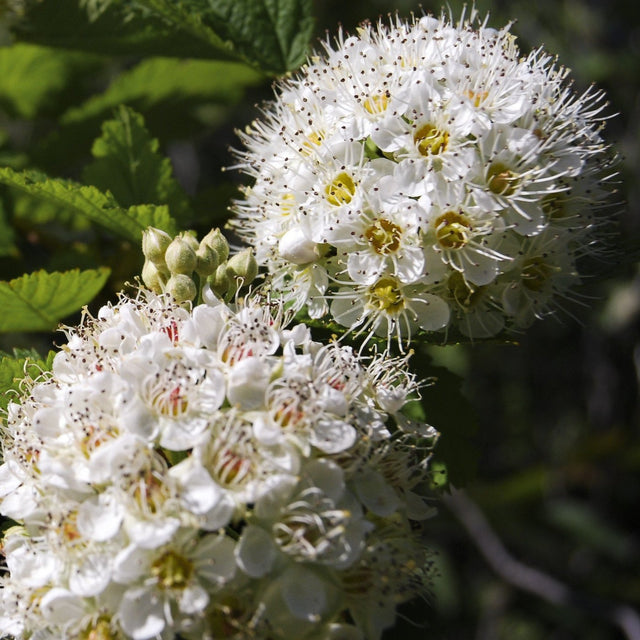
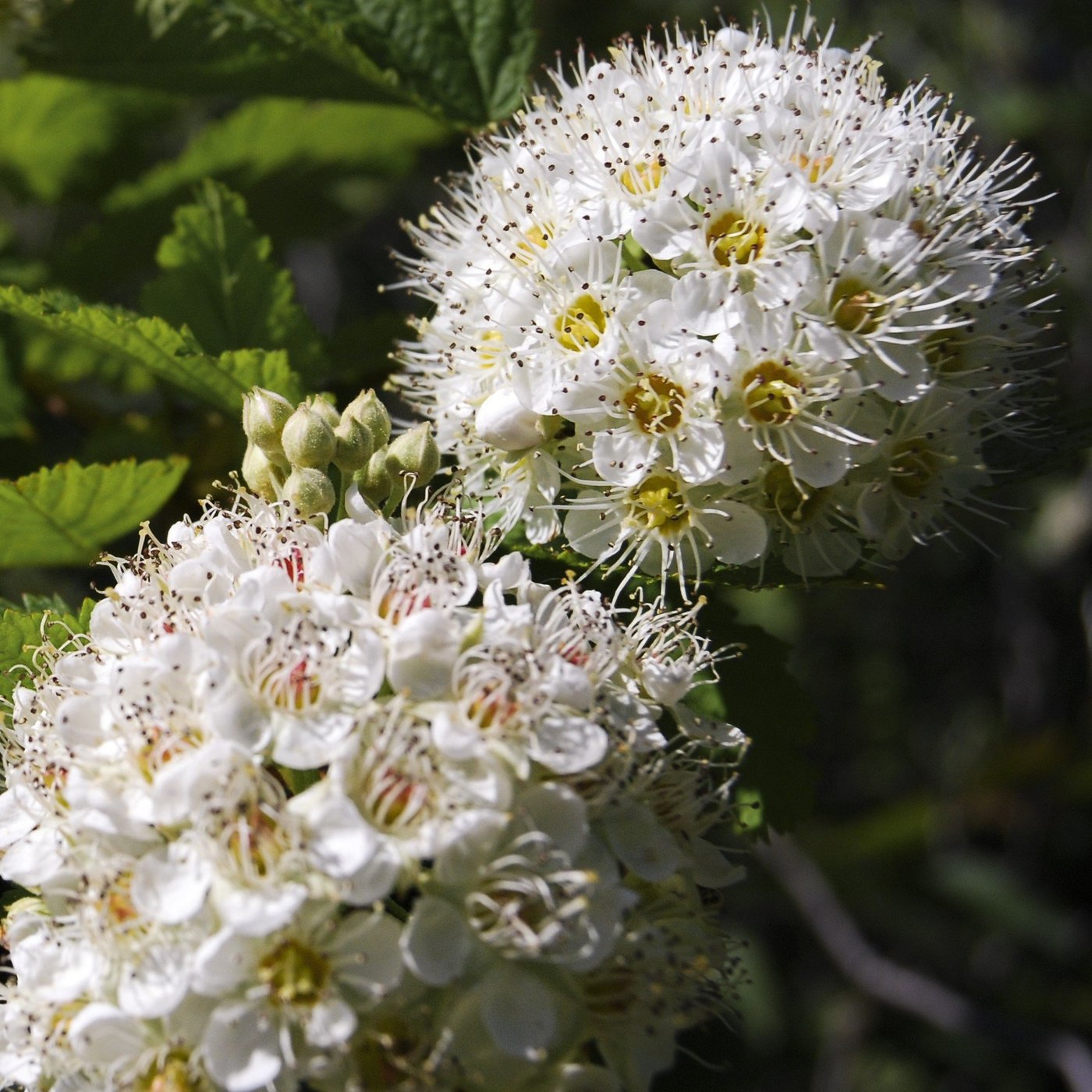
Spring flower clusters provide forage for bees. Keep portions of the hedge unpruned through bloom instead of shaping every stem at once.
Structure after flowering
Seed capsules and peeling bark give a close-up view of the shrub beyond its bloom season. Older branches also make a denser sheltering framework.
Renew without flattening the form
Remove selected old stems at the base when needed. Space plants for mature width and airflow rather than treating them as a narrow clipped screen.
Product Details
- Native range: Central and eastern North America
- Life cycle: Deciduous woody perennial
- Sun: Full Sun; Part Sun/Shade
- Soil moisture: Medium-Dry; Medium; Medium-Wet
- Mature height: 5–8 feet
- Bloom: May–June–July
- Bloom color: White, Pink
- USDA hardiness zones: 2–8
- Fruit or seed: Clusters of dry seed capsules follow the flowers; not an edible berry crop.
- Pollination: Insect-visited flowers; no named cultivar partner is needed for a mixed habitat planting.
Planting and Ongoing Care
Keep bare roots moist until planting, water the root zone during establishment, and mulch without covering the crown. Base fertilizer on a soil test; our Tree Planting Kit fertilizer blend can be used according to its label when feeding is needed.
Watch for powdery mildew in crowded, humid plantings. Open spacing and removal of affected growth help reduce pressure. Avoid insecticides on open flowers. Seed-grown plants vary in growth, flowering, and fruiting.
-
Sun RequirementsFull Sun, Part Sun/Shade
-
Soil RequirementsMedium-Dry, Medium, Medium-Wet
-
Bloom ColorWhite, Pink
-
Bloom TimeMay, June, July
-
USDA Hardiness ZonesZone 3, Zone 4, Zone 5, Zone 6, Zone 7, Zone 8
-
Native StatesMaine, Vermont, New York, Pennsylvania, Ohio, Illinois, Indiana, Michigan, Wisconsin, Missouri, Kentucky, Tennessee, Virginia, North Carolina, South Carolina, Georgia, Alabama
Payment & Security
Payment methods
Your payment information is processed securely. We do not store credit card details nor have access to your credit card information.