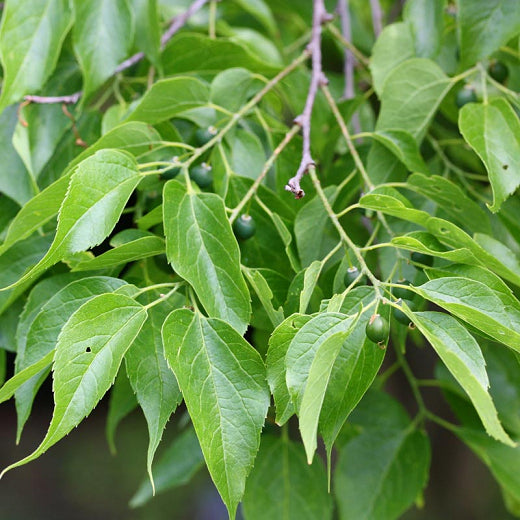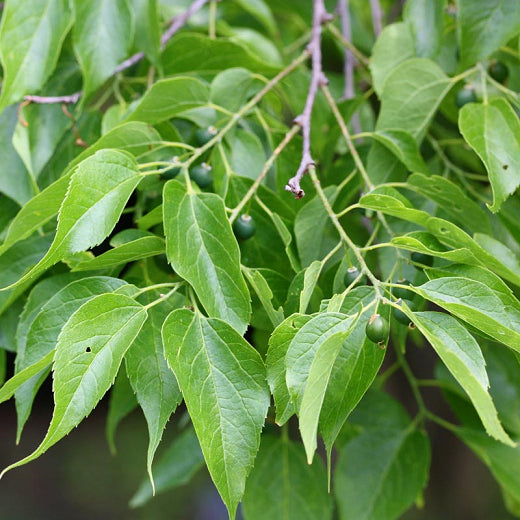

Hackberry, Bare Root
A canopy host for hackberry emperors
Delivery and Shipping
Delivery and Shipping
Make sure to thoroughly review our entire "Shipping, Returns, Refunds, and Our Guarantee" page for all relevant details about ordering from our store.
Making a purchase from our store constitutes an agreement to all the conditions outlined in those policies.
We appreciate your support and look forward to being your favorite plant provider!
Subscribe to our newsletter
Sign up for exclusive offers.

Hackberry, Bare Root
Hackberry (Celtis occidentalis)
An adaptable, substantial shade tree for habitat planting and roomy landscapes. Its greatest contribution may be the insects using its leaves rather than the size of its small fruits.
Key Characteristics
A named butterfly connection
Hackberry emperor and question mark caterpillars feed on the foliage. This supplies a larval resource that a nectar-only flower bed cannot replace.
A canopy for mixed conditions
Established trees tolerate a broad range of soils. Water seedlings through establishment even when the eventual planting is intended to be drought tolerant.
Allow a large crown
Place it away from tight foundations and narrow paved spaces. Keep some leaves beneath the canopy as part of a layered habitat planting.
Product Details
- Native range: Central and eastern North America
- Life cycle: Deciduous woody perennial tree
- Sun: Full Sun; Part Sun/Shade
- Soil moisture: Medium-Dry; Medium; Medium-Wet
- Mature height: 40–100 feet; varies with seedling and site
- Bloom time: April–May
- Bloom color: Green
- USDA hardiness zones: 3–9
- Fruit or seed: Small fleshy drupes used by birds and other wildlife.
- Pollination: Wind-pollinated; no named companion is required for a landscape tree.
Planting and Ongoing Care
Keep bare roots moist until planting and spread roots without bending them into a tight hole. Water during establishment, mulch clear of the trunk, and protect young trees from browsing and mowing damage. Base feeding on a soil test; our Tree Planting Kit fertilizer blend can be used according to its label when needed.
Leaf galls and witches'-broom can be cosmetic. Assess overall vigor before treating and protect young trunks from damage. Avoid insecticides on open flowers. These are seedlings rather than selected clones, so growth, flowering, and fruiting vary.
-
Sun RequirementsFull Sun, Part Sun/Shade
-
Soil RequirementsMedium-Dry, Medium, Medium-Wet
-
Bloom ColorGreen
-
Bloom TimeApril, May
-
USDA Hardiness ZonesZone 3, Zone 4, Zone 5, Zone 6, Zone 7, Zone 8, Zone 9+
-
Native StatesMaine, Vermont, New York, Pennsylvania, Ohio, Indiana, Illinois, Michigan, Wisconsin, Missouri, Kentucky, Tennessee, Virginia, North Carolina, South Carolina, Georgia, Alabama, Mississippi, Arkansas, Louisiana, Oklahoma, Texas
Payment & Security
Payment methods
Your payment information is processed securely. We do not store credit card details nor have access to your credit card information.