Mulberry, Red, Bare Root
Sweet summer fruit for people and birds
Delivery and Shipping
Delivery and Shipping
Make sure to thoroughly review our entire "Shipping, Returns, Refunds, and Our Guarantee" page for all relevant details about ordering from our store.
Making a purchase from our store constitutes an agreement to all the conditions outlined in those policies.
We appreciate your support and look forward to being your favorite plant provider!
Subscribe to our newsletter
Sign up for exclusive offers.
Mulberry, Red, Bare Root
Red Mulberry (Morus rubra)
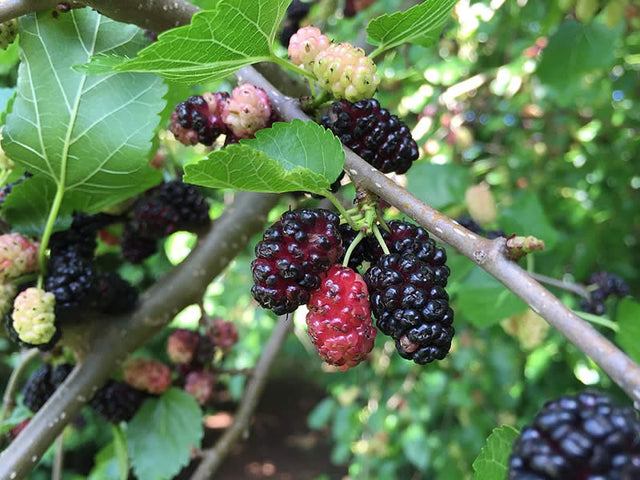
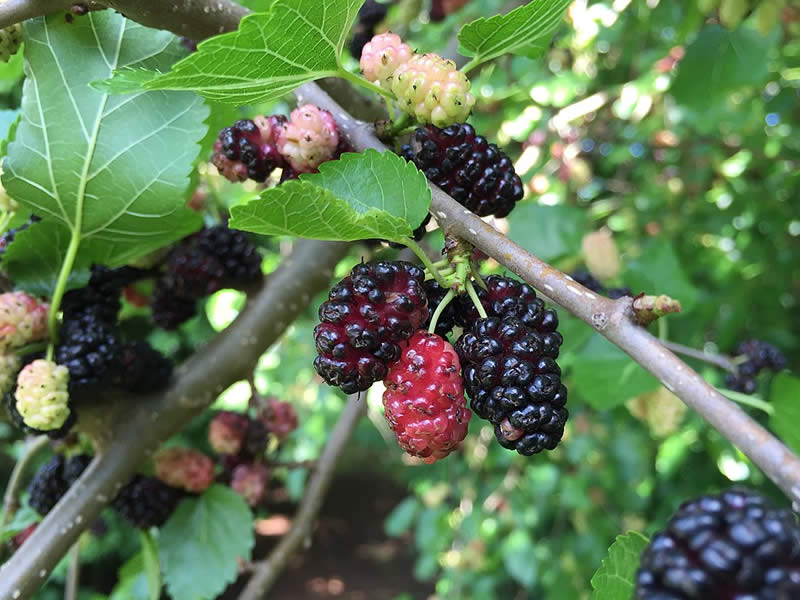
A native fruiting tree for a roomy food forest or wildlife planting. Ripe mulberries are soft and sweet, and birds are likely to share the crop.
Key Characteristics
A fresh, soft fruit
Pick fully ripe berries for eating or baking. Fruit texture, flavor, and yield vary because these are seed-grown trees.
Birds with a place at the table
Gray catbirds and northern mockingbirds eat the fruit. Situate the tree where sharing part of the harvest works with the purpose of the planting.
Plan around dropped berries
A mature crown can spread widely. Keep it away from parked cars, pale paving, and patios where ripe fruit could stain.
Seedling sex is unselected
Seedlings may be male, female, or bear both flower types. Plant several for a better chance of fruiting females and pollen availability; an individual tree's sex is not guaranteed.
Product Details
- Plant type: Deciduous perennial tree or large shrub
- Native range: Eastern and central North America
- Sun: Full Sun; Part Sun/Shade
- Soil moisture: Medium; Medium-Dry
- Mature height: 25–60 feet
- Bloom: April–May; Green
- Fruit: Sweet, juicy blackberry-like fruit when fully ripe; eaten fresh or used in pies, jam, and baking.
- Harvest: Early summer
- Pollination: Seedling sex is unselected. Plant several seedlings; fruiting and pollen availability depend on the flower types they develop.
- Hardiness: USDA zones 4–9
- Stock: Seed-grown bare root plants; choose the seedling size.
Planting and Ongoing Care
Plant promptly and keep bare roots from drying out. Water the root zone, mulch clear of the stems, and protect seedlings from mowing damage and browsing. Base fertilizer on a soil test rather than feeding automatically; if needed, our Tree Planting Kit fertilizer blend should be used according to its label.
Choose a well-drained site and avoid trunk damage. Watch for scale, borers, and dieback, and remove badly affected wood rather than routinely spraying. Avoid insecticides on open flowers.
Interested in permaculture and stacking functions? Our fruit-tree guild guide explains how to combine planting layers and roles around fruit trees.
-
Sun RequirementsFull Sun, Part Sun/Shade
-
Soil RequirementsMedium, Medium-Dry
-
Bloom ColorGreen
-
Bloom TimeApril, May
-
USDA Hardiness ZonesZone 4, Zone 5, Zone 6, Zone 7, Zone 8, Zone 9+
-
Native StatesMaine, Vermont, New Hampshire, New York, Pennsylvania, Ohio, Indiana, Illinois, Michigan, Wisconsin, Missouri, Kentucky, Tennessee, Virginia, North Carolina, South Carolina, Georgia, Alabama, Mississippi, Arkansas, Louisiana, Texas
Payment & Security
Payment methods
Your payment information is processed securely. We do not store credit card details nor have access to your credit card information.