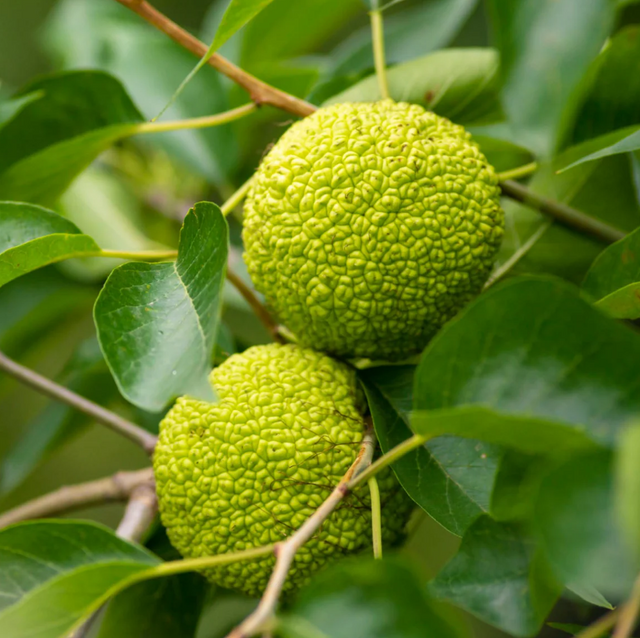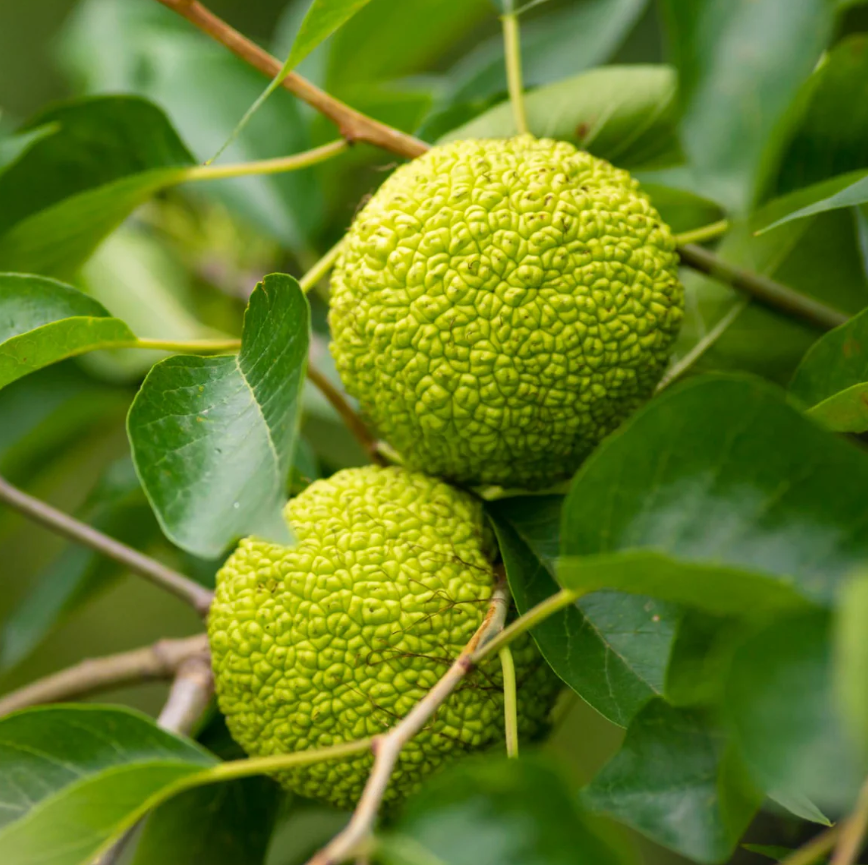

Osage Orange, Bare Root
A thorny living boundary with a long history
Delivery and Shipping
Delivery and Shipping
Make sure to thoroughly review our entire "Shipping, Returns, Refunds, and Our Guarantee" page for all relevant details about ordering from our store.
Making a purchase from our store constitutes an agreement to all the conditions outlined in those policies.
We appreciate your support and look forward to being your favorite plant provider!
Subscribe to our newsletter
Sign up for exclusive offers.
Osage Orange, Bare Root
Osage Orange (Maclura pomifera)
A thorny, durable tree historically used for living fences. Its native range is much smaller than its planted range, and its large green fruits are not dessert oranges.
Key Characteristics
A fence that becomes a tree
Dense branches and thorns can form a substantial boundary. Place it well away from narrow paths, play areas, and livestock handling spaces.
Seedlings are not thornless selections
These plants are not named thornless male cultivars. Sex, thorniness, form, and fruit production vary; female trees can drop large hedge-apples.
Wildlife uses the seeds
Squirrels tear open the fruit to reach seeds inside. The fruit is not a human food crop, and fallen fruits need a suitable place to land.
Product Details
- Native range: South-central United States; widely planted and naturalized elsewhere
- Life cycle: Deciduous woody perennial tree
- Sun: Full Sun
- Soil moisture: Dry; Medium-Dry; Medium; Medium-Wet
- Mature height: 25–70 feet; varies with seedling and site
- Bloom time: May–June
- Bloom color: Green
- USDA hardiness zones: 4–9
- Fruit or seed: Large green hedge-apples on female trees; not for human consumption.
- Pollination: Separate male and female trees; seedlings are unsexed and wind-pollinated.
Planting and Ongoing Care
Keep bare roots moist until planting and spread roots without bending them into a tight hole. Water during establishment, mulch clear of the trunk, and protect young trees from browsing and mowing damage. Base feeding on a soil test; our Tree Planting Kit fertilizer blend can be used according to its label when needed.
Usually has few serious pest problems. Site around thorns and fallen fruit rather than relying on pruning to solve a poor location. Avoid insecticides on open flowers. These are seedlings rather than selected clones, so growth, flowering, and fruiting vary.
-
Sun RequirementsFull Sun
-
Soil RequirementsDry, Medium-Dry, Medium, Medium-Wet
-
Bloom ColorGreen
-
Bloom TimeMay, June
-
USDA Hardiness ZonesZone 4, Zone 5, Zone 6, Zone 7, Zone 8, Zone 9+
-
Native StatesArkansas, Oklahoma, Texas
Payment & Security
Payment methods
Your payment information is processed securely. We do not store credit card details nor have access to your credit card information.