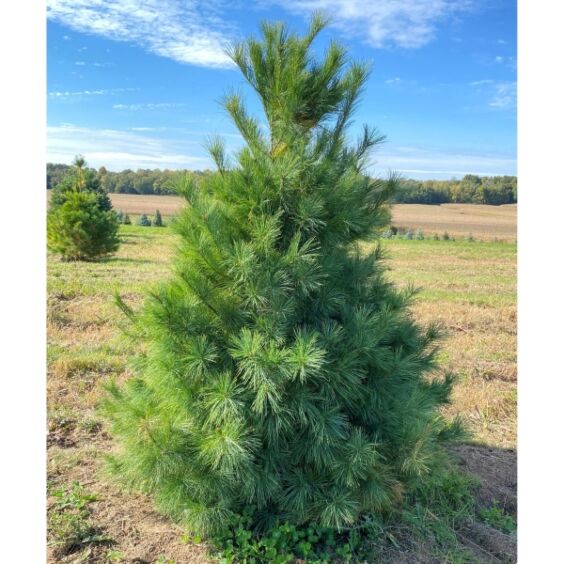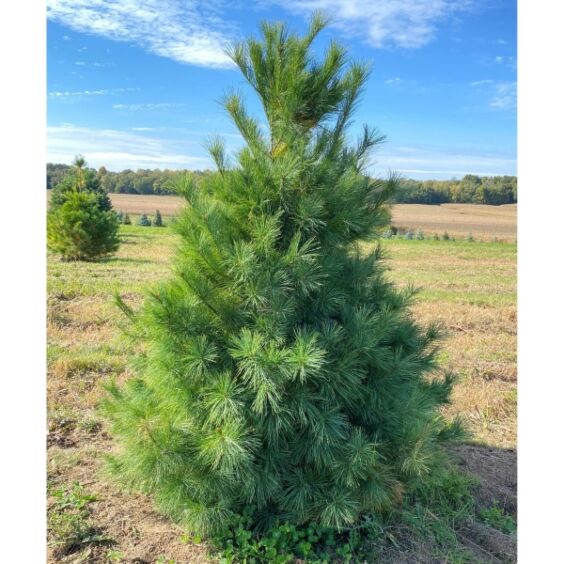
Pine, White, Bare Root
Soft needles and a sheltering evergreen canopy
Couldn't load pickup availability
Delivery and Shipping
Delivery and Shipping
Make sure to thoroughly review our entire "Shipping, Returns, Refunds, and Our Guarantee" page for all relevant details about ordering from our store.
Making a purchase from our store constitutes an agreement to all the conditions outlined in those policies.
We appreciate your support and look forward to being your favorite plant provider!
Pine, White, Bare Root
Eastern White Pine (Pinus strobus)
A large evergreen with soft-looking needles in bundles of five. It can form a sheltering canopy or broad screen where soils drain well and roots have room.
Key Characteristics
Cover that stays through winter
Evergreen branches shelter birds while cones provide seeds. Imperial moth caterpillars also use the foliage.
A screen needs mature spacing
Young trees may look narrow but become wide and tall. Allow room away from roofs, utility lines, and small paved spaces.
Cool roots and good drainage
Keep seedlings watered without leaving them in a saturated hole. Road salt, compacted soils, and exposed hot sites can reduce performance.
Product Details
- Native range: Central and eastern Canada and the United States
- Life cycle: Evergreen woody perennial tree
- Sun: Full Sun; Part Sun/Shade
- Soil moisture: Medium-Dry; Medium
- Mature height: 50–80 feet; varies with seedling and site
- Pollen/cone season: April–May–June
- Pollen/cone colors: Yellow, Pink
- USDA hardiness zones: 3–8
- Fruit or seed: Long woody cones release seeds used by birds and small mammals.
- Pollination: Wind-pollinated; no named variety partner is required.
Planting and Ongoing Care
Keep bare roots moist until planting and spread roots without bending them into a tight hole. Water during establishment, mulch clear of the trunk, and protect young trees from browsing and mowing damage. Base feeding on a soil test; our Tree Planting Kit fertilizer blend can be used according to its label when needed.
Watch for white pine weevil, blister rust, and stress-related needle decline. Avoid salt exposure and root disturbance. Avoid insecticides on open flowers. These are seedlings rather than selected clones, so growth, flowering, and fruiting vary.
-
Sun RequirementsFull Sun, Part Sun/Shade
-
Soil RequirementsMedium-Dry, Medium
-
Bloom ColorYellow, Pink
-
Bloom TimeApril, May, June
-
USDA Hardiness ZonesZone 3, Zone 4, Zone 5, Zone 6, Zone 7, Zone 8
-
Native StatesMaine, Vermont, New Hampshire, New York, Pennsylvania, Ohio, Indiana, Illinois, Michigan, Wisconsin, Minnesota
Payment & Security
Payment methods
Your payment information is processed securely. We do not store credit card details nor have access to your credit card information.